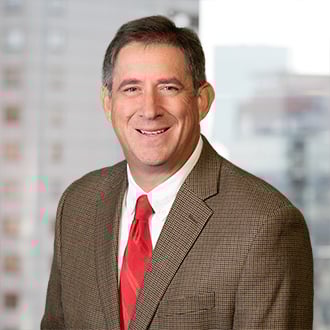
AGG Leads Commercial Real Estate Industry Advocacy on Capitol Hill: David Marmins Joins 2026 ICSC Federal Fly-In
Key Takeaways
- AGG partner David Marmins led ICSC’s Georgia Government Relations delegation, who met with U.S. Senators and Representatives to advocate for legislation addressing commercial real estate industry legislative priorities.
- Through AGG’s direct engagement with Congressional offices, David and his delegation communicated that proposed incentives and regulatory clarity could unlock deferred redevelopment projects, particularly where conversion economics and environmental risk have limited deal viability under current conditions.
- AGG’s ongoing leadership in federal policy advocacy positions the firm to help owners, developers, managers, and investors understand how policies, incentives, and liability frameworks could affect deal strategy and execution.
As the ICSC Georgia Government Relations Chair and a member of the organization’s Legal Advisory Council, David led the Georgia delegation during the Fly-In. Before heading to Capitol Hill, David met with other state government relations chairs to discuss issues facing commercial real estate professionals around the country. David led a discussion on the importance of local incentive programs. For example, Atlanta is currently evaluating whether to extend its Tax Allocation Districts (“TADs”) through 2055. Under the TAD structure, property tax revenues are frozen at a base level, and increases in value resulting from new development are reinvested in the district to fund infrastructure, public improvements, and redevelopment of blighted properties. Once the TAD expires, the full tax base, including growth, returns to the general tax base. The proposed extension is estimated to generate more than $5 billion for future projects.
Professional ICSC lobbyists led trainings designed to drill down on the federal legislative issues facing the industry and educate ICSC representatives in advance of their Congressional meetings. This year, the annual ICSC Federal Fly-In focused on obtaining support for pending legislation focused on combating organized retail crime, providing redevelopment incentives, and clarifying environmental liability limitations for commercial real estate buyers.
Organized Retail Crime
Congress is considering the Combating Organized Retail Crime Act (“CORCA”), which would expand federal tools to address organized retail theft and is a leading legislative priority for the retail industry.
Organized retail crime is coordinated theft and resale of merchandise through sophisticated networks, with reported losses reaching approximately $9 billion in 2025. Major retailers have cited crime and safety concerns as contributing factors in store closures, which can have devastating effects on surrounding communities and local economies.
If enacted, CORCA would:
- Create a federal task force focused on organized retail crime
- Support coordination between public and private stakeholders
- Update federal criminal statutes to reflect modern retail theft operations
For owners and operators, AGG is closely tracking these developments and advising clients on how increased enforcement focus may affect property-level security strategies, tenant coordination, and engagement with law enforcement.
Redevelopment Constraints and Federal Incentives
Federal policymakers are considering measures intended to support the redevelopment of older commercial properties, particularly where conversion to residential or mixed-use projects may address housing needs.
Many of these projects contend with costs that make it hard for them to pencil. Construction expenses, financing costs, and regulatory requirements continue to limit redevelopment activity, even in locations where demand exists. As a result, some assets remain underutilized because the economics do not support redevelopment under current conditions.
Revitalizing Downtowns and Main Street Act
One proposal under consideration is the Revitalizing Downtowns and Main Street Act, which would provide a federal tax credit to support the conversion of commercial properties into residential use. The proposal includes a 20% credit for qualifying costs, increasing to 35% in certain rural and low-income areas, along with a requirement that a portion of units be reserved for individuals earning 80% or less of area median income.
Conversion projects often require significant upfront investment to address structural limitations and comply with current building standards. A tax credit of this scale could offset a portion of those costs and improve the feasibility of projects that are currently being deferred, although the affordability requirement may affect revenue assumptions.
Brownfields Redevelopment and PFAS
Environmental considerations, including potential contamination by per- and polyfluoroalkyl substances (“PFAS”), remain a significant factor in many real estate transactions. Environmental liability, including PFAS, presenting a challenge in not only the presence of contamination, but also the lack of clear federal standards governing acceptable levels and liability allocation to subsequent property owners. This uncertainty can complicate due diligence, extend transaction timelines, and affect lender participation.
Industry stakeholders have emphasized the need for clearer federal guidance, including defined background levels and liability protections for parties that follow appropriate remediation processes. Greater clarity would not eliminate environmental risk, but it could provide a more predictable framework for evaluating and allocating that risk in transactions involving affected properties.
What’s Next?
David’s work will continue during the annual ICSC Las Vegas conference in May 2026, where he will join ICSC Legal Advisory Council and Government Relations leadership meetings to evaluate emerging legal issues and coordinate positions on matters affecting commercial real estate nationwide.
AGG will be monitoring the progress of key legislation, including CORCA, the Revitalizing Downtowns and Main Street Act, and the Brownfields Reauthorization Act, as well as developments related to PFAS liability. AGG’s leadership at the forefront of commercial real estate policy means you have a partner who is not just tracking these issues — but actively shaping the outcomes.
Related Services
Related Industries
- David J. Marmins
Partner